Wat Paknam Phasi Charoen needs its own Thonburi journey. The large outdoor Buddha and the glass-stupa interior are different parts of the visit, and neither should be treated as a quick extra stop reached automatically by a Chao Phraya express boat.
Choose the two things you want to see
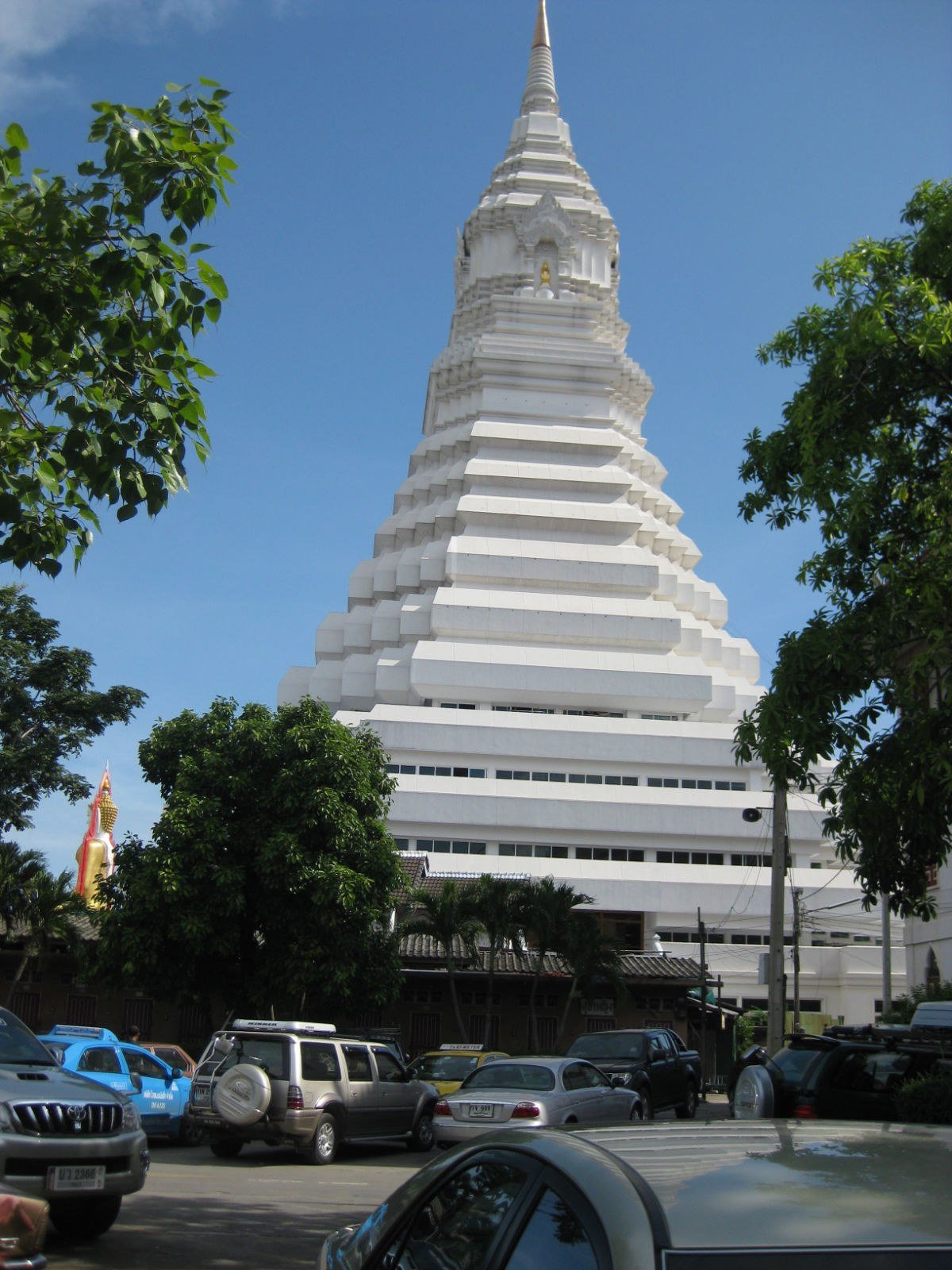
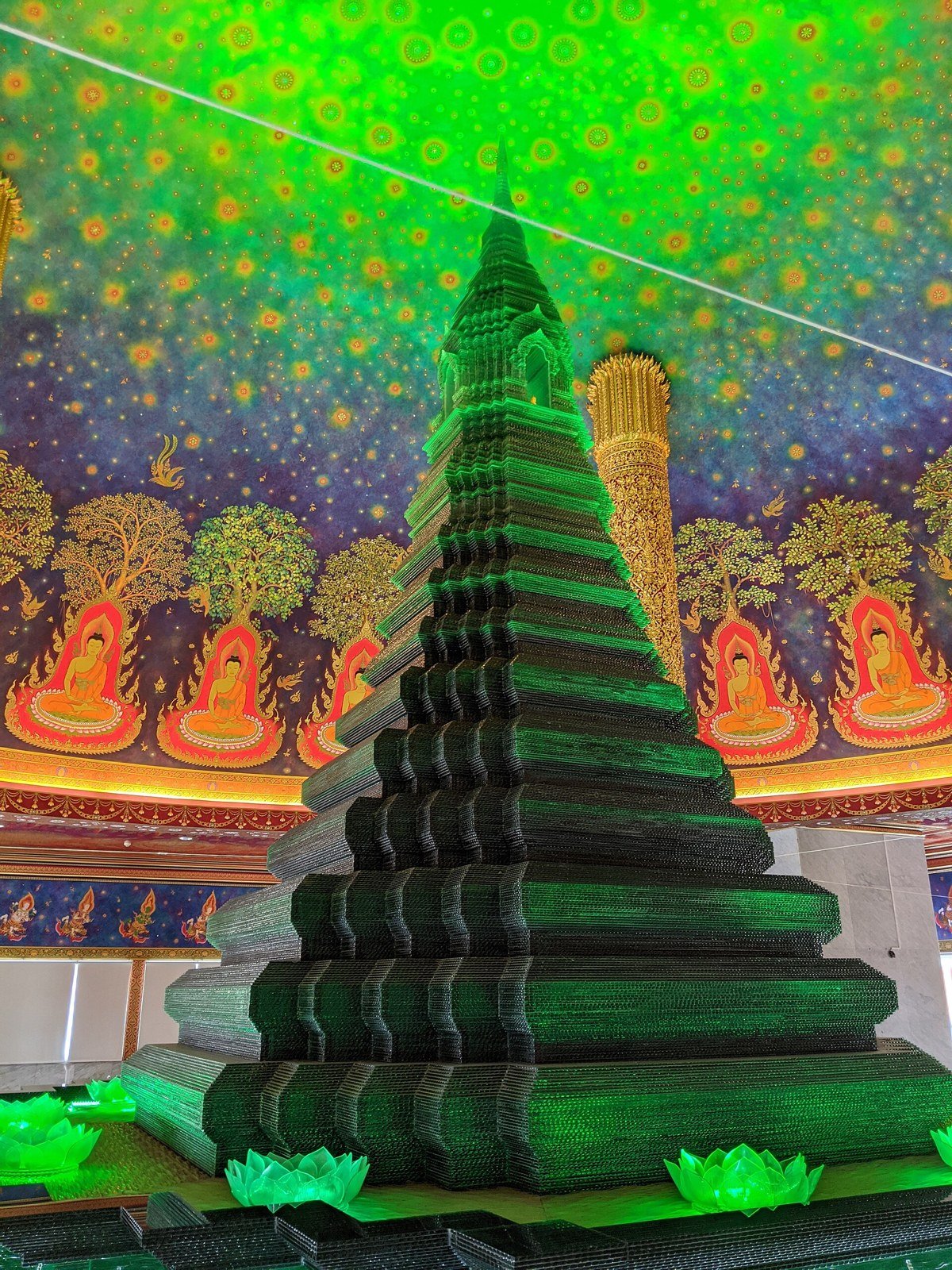
The large Buddha is Phra Phuttha Dhammakaya Thepmongkhon, a seated image rising above the surrounding neighbourhood. Behind it is Phra Maha Chedi Maha Ratchamongkhon. The tourism directory describes a glass stupa on the fifth level of the chedi, with museum displays on the lower levels.
An outdoor view of the Buddha does not substitute for a visit inside the chedi. If architecture and the glass-stupa setting are your main interest, keep the interior on the plan rather than allocating the entire stop to a canal-side photograph. Conversely, someone primarily interested in the large image should first check the current approach and any work barriers.
The restoration update has moved on
The temple’s own completion announcement says restoration of the large Buddha has finished and that the image is visible again. This supersedes its July 2025 progress report, which still described work on the lap and base. Old photographs of scaffolding should therefore not be used as proof that the whole image remains covered.
The completion notice does not give a precise completion date. It also does not promise access to every neighbouring building, an unrestricted close-up position or uninterrupted viewing during ceremonies. Use the restored outdoor image and the chedi interior as separate visit decisions, with the temple’s current instructions taking priority.
The chedi is a separate interior visit
The tourism directory identifies museum material, Buddha images and antiquities within the chedi as well as its glass-stupa display. Those are reasons to look beyond the scale of the outdoor Buddha. Follow the visitor circulation and the entrance instructions for the particular spaces that are open.
Upper-level access deserves an explicit check for anyone who cannot use stairs comfortably. The existence of several floors does not establish that an operational passenger lift is available to every visitor. No step-free itinerary is promised here. If the upper room is the purpose of the journey, settle the access question before travelling.
Use the temple’s rail-to-road approach
The temple’s own contact page suggests BTS Wutthakat followed by a taxi or local bus connection. This is a practical approach to investigate when planning from the BTS network. The final leg is part of the journey; the station name should not be interpreted as a temple entrance beside the platform.
The same page lists canal transport among possible approaches but does not provide a current visitor sailing schedule. Do not confuse the local canals with the Chao Phraya express-boat system used for other Bangkok temples. A canal-side photograph of Wat Paknam does not tell you which public service is operating.
Make a Thonburi plan that fits the geography
Wat Paknam’s own history places the monastery among Khlong Bang Luang, Khlong Dan and the Phasi Charoen waterway area. The waterways explain its setting, but they can also make a straight line on a map misleading as a pedestrian route. Use the actual bridges and public approaches rather than assuming a direct canal-bank walk.
As an editorial choice, make Wat Paknam the main temple visit for this part of the day. A journey back towards the older riverfront temples can be added if there is a verified road or public-transport connection that suits the group. There is no need to force it into the same short outing as Wat Arun and Wat Kalayanamit merely because all three are on the Thonburi side.
A monastery with an active religious life
The temple presents itself as a centre of Buddhist study and meditation as well as a place with monumental architecture. Its heritage extends back to the Ayutthaya period. The large modern image therefore belongs to a much older monastery, rather than defining the whole history of the site.
Keep covered shoulders and knees for the religious spaces and follow local footwear and photography instructions. Avoid treating a meditation or study area as a route to a better photograph. Where an activity is underway, use the visitor areas indicated by the temple rather than attempting to enter simply because another door is open.
Confirm the visit, then select accommodation
Current daily visitor hours and the access status of individual buildings should be checked directly if the timing of your trip depends on them. The tourism directory indicates no admission charge, but this guide does not turn that into a promise that every exhibition or organised activity is included without conditions.
A hotel near the BTS connection may be more useful for this visit than a property described only as near the river. For a longer Bangkok temple trip, weigh the final Wutthakat transfer against the other days you will spend around the old city. Choose a transport base for the whole itinerary, and plan Wat Paknam as a distinct journey with its own final transfer.
Sources & further reading
Sources checked on 29 October 2026. Confirm current visiting arrangements and ceremony notices before setting out.