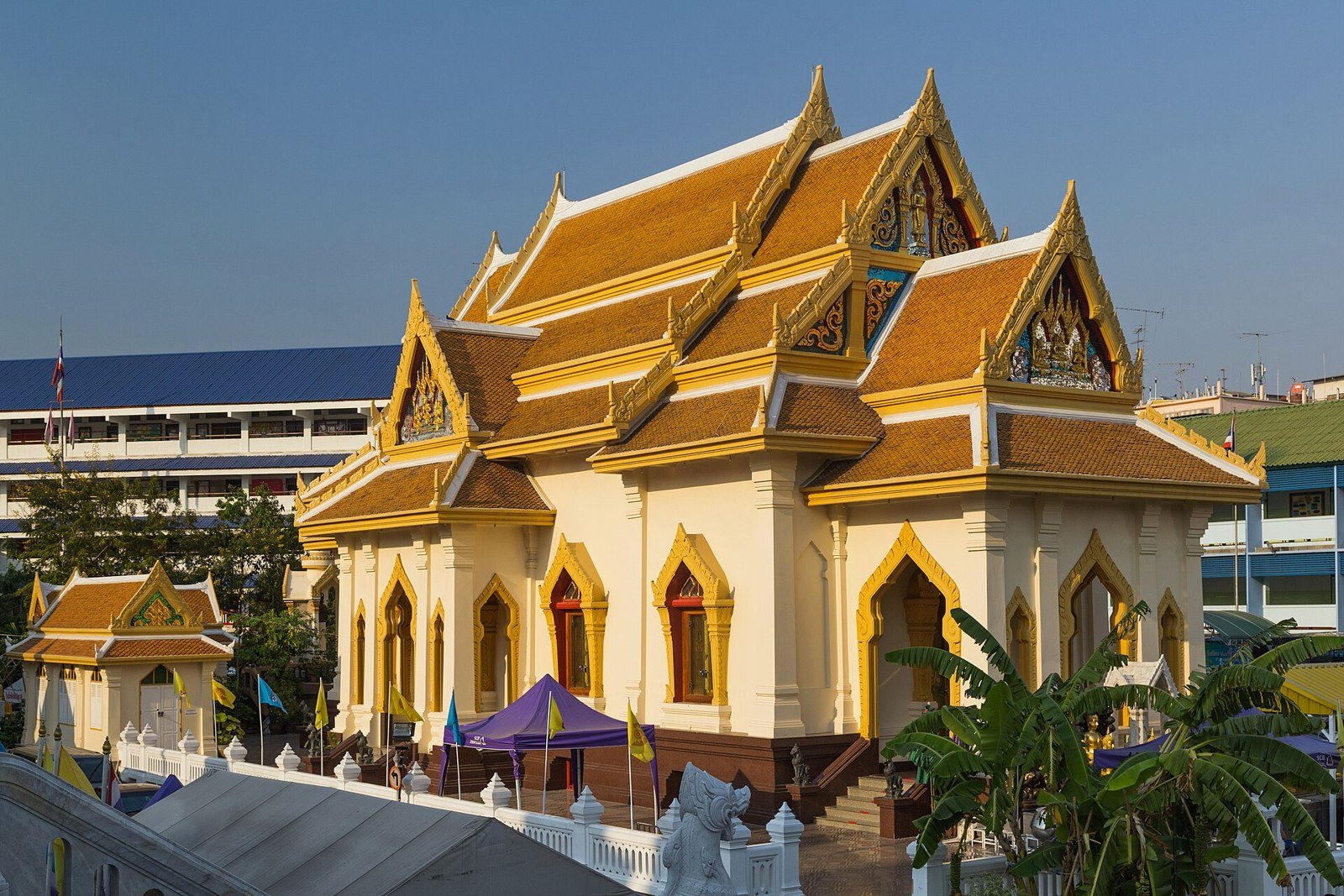
Wat Traimit is a useful first stop for a Chinatown day, but the Golden Buddha shrine and the heritage exhibitions should be treated as separate parts of the visit. Decide whether you want to see the Buddha image alone or understand more of Yaowarat’s history before choosing your day and buying a ticket.
The image is the reason to come
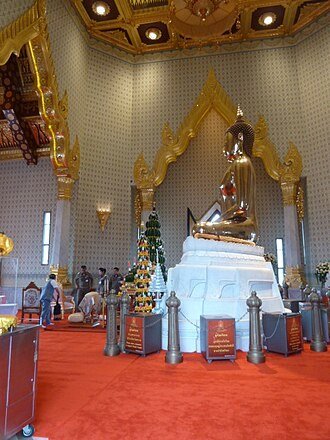
The temple stands on the eastern side of Bangkok’s Chinatown, near Hua Lamphong and the Chinatown Gate. Its celebrated gold Buddha is a seated image associated with the Sukhothai tradition. The name Wat Traimit identifies the whole monastery; it does not mean that every Buddha image inside it is made of solid gold.
The Golden Buddha belongs to a worship setting. Looking at the image and observing the room is a different activity from reading an exhibition. If your interest is primarily Buddhist art, leave enough attention for the figure itself rather than treating the shrine as a photograph to collect before the next stop.
A temple visit and an exhibition visit
The official tourism description separates the Golden Buddha display from the Yaowarat history centre. The latter examines the Chinese community and the development of the district. That makes it relevant to a later Chinatown walk, while someone concentrating on religious art may prefer a shorter visit focused on the shrine.
Tourism Authority of Thailand information lists the history centre as closing on Mondays, even though the temple visit is described as daily. Treat that distinction as a planning warning and confirm the exhibition’s current operating day before travelling for it specifically. An open temple gate does not establish that a museum ticket counter is operating.
Read the ticket for the space you want
Admission information is not consistent enough to give one reliable combined price here. The official tourism listing separates categories of access, while other government material describes free worship access. Check the current posted charges and ask which spaces a ticket includes before paying; do not assume a courtyard visit and the exhibition have identical conditions.
Arrive from Hua Lamphong
DASTA identifies MRT Hua Lamphong as a practical rail approach and points visitors towards Exit 1. Use the temple’s location near the Chinatown Gate to orient the final street approach. Hua Lamphong is the useful station name for this visit; a hotel advertising only that it is in central Bangkok says little about the journey.
Another revered image on the grounds
The monastery also has the gold-leafed stucco Buddha Phra Phuttha Thotsaphonyan in its ordination hall, known locally as Luang Pho To or Luang Pho Wat Sam Chin. This is a separate image from the famous gold Buddha. Knowing the distinction helps visitors who want to understand the monastery beyond its best-known attraction.
Use the open visitor areas rather than assuming that every religious building can be entered. Worshippers have priority inside the halls. Dress with covered shoulders and knees, follow footwear instructions at each entrance, and check the local photography notices before photographing a shrine interior.
Make the Chinatown connection useful
A sensible editorial sequence is the temple first, any open exhibition second, and the Yaowarat area afterwards. This is a suggested order, not a timetable or a promise that every street business will be open. It works better than leaving the shrine until the end of an evening food outing and expecting daytime visitor access to continue.
For accommodation, compare the Hua Lamphong and Chinatown areas if these are the main focus of your trip. Riverside hotels can also suit a wider temple itinerary, but check the actual transfer to Hua Lamphong. A river view is not evidence that a property has a direct boat service to Wat Traimit.
Sources & further reading
Sources checked on 29 October 2026. Confirm current visiting arrangements and ceremony notices before setting out.


