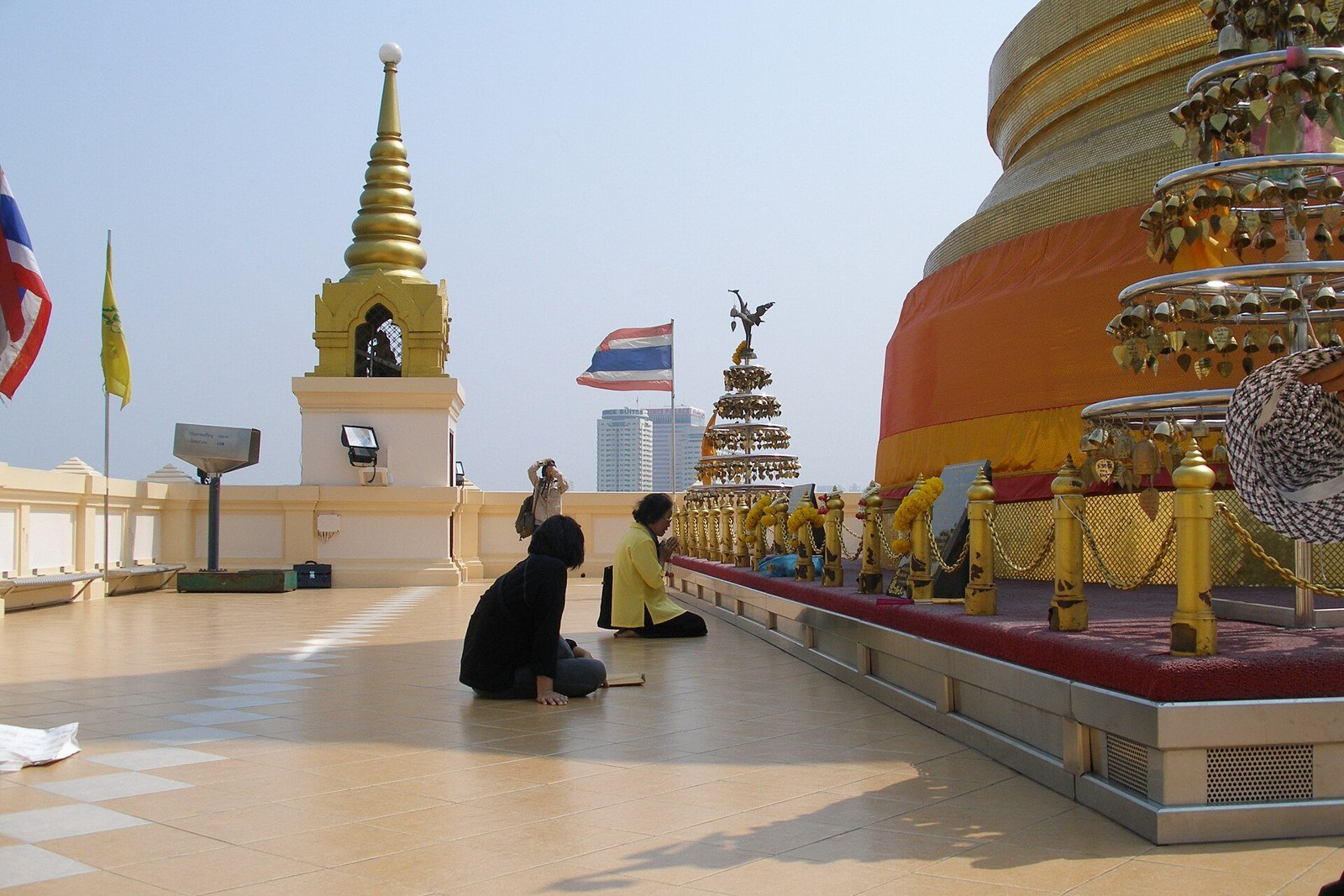
The Golden Mount is the part of Wat Saket that changes the shape of a visit. Reaching the chedi and the city outlook involves a stair climb, while the monastery at its base is a separate part of the compound. Decide whether the summit is your main purpose before fitting this stop between other Bangkok temples.
Choose between the mount and the monastery
Wat Saket stands beside Khlong Maha Nak in Pom Prap Sattru Phai, near the Phan Fa Lilat junction. Its older name was Wat Sakae, and its history reaches back before Bangkok became the capital. The golden chedi on the artificial hill is the landmark that makes it easy to recognise from a distance; it is not the whole temple.
DASTA's destination description identifies other features in the grounds, including the ordination hall, a scripture library and a Sri Lankan bodhi tree. A visitor whose interest is the monastery can therefore make a different plan from someone coming chiefly for an elevated panorama. Neither kind of visit should be treated as a promise that every religious building will be open.
For a first visit, make the climb your main activity rather than a small extra after a long sequence of halls elsewhere. That leaves you free to pause, spend time around the chedi and look at the old-city setting without watching the next admission deadline throughout the ascent. This is an editorial way to organise the day, not a required temple route.
Understand what the ascent asks of you
The approach to the Golden Mount rises by stairs. It is a different physical task from walking through the ground-level courtyards of Wat Suthat. Visitors who find repeated steps difficult should make the climb a deliberate choice, rather than assuming that a temple ticket describes a level sightseeing circuit.
Ask staff which ascent and descent routes are in use before starting, particularly if maintenance, rain or a ceremony affects movement. The summit visit should not be assumed to be step-free. If someone in your party stays below, arrange the meeting point before separating; the temple grounds and the top of the mount are distinct places.
The chedi is a place of worship containing Buddha relics. At the upper levels, leave room for people approaching it to pay respect instead of occupying the circulation space for a photograph. Take the city view as part of the visit, without treating the sacred structure merely as a viewing platform.
Read the current entry arrangements at the mount
TAT's visitor listing gives a foreign-adult admission of 100 baht and hours of 07:00–19:00. Use these as published planning information and check the current entrance notice before paying or beginning a late climb. A special event can change the practical visitor flow even when the wider temple remains active.
Leave room for ceremonies and the annual worship period
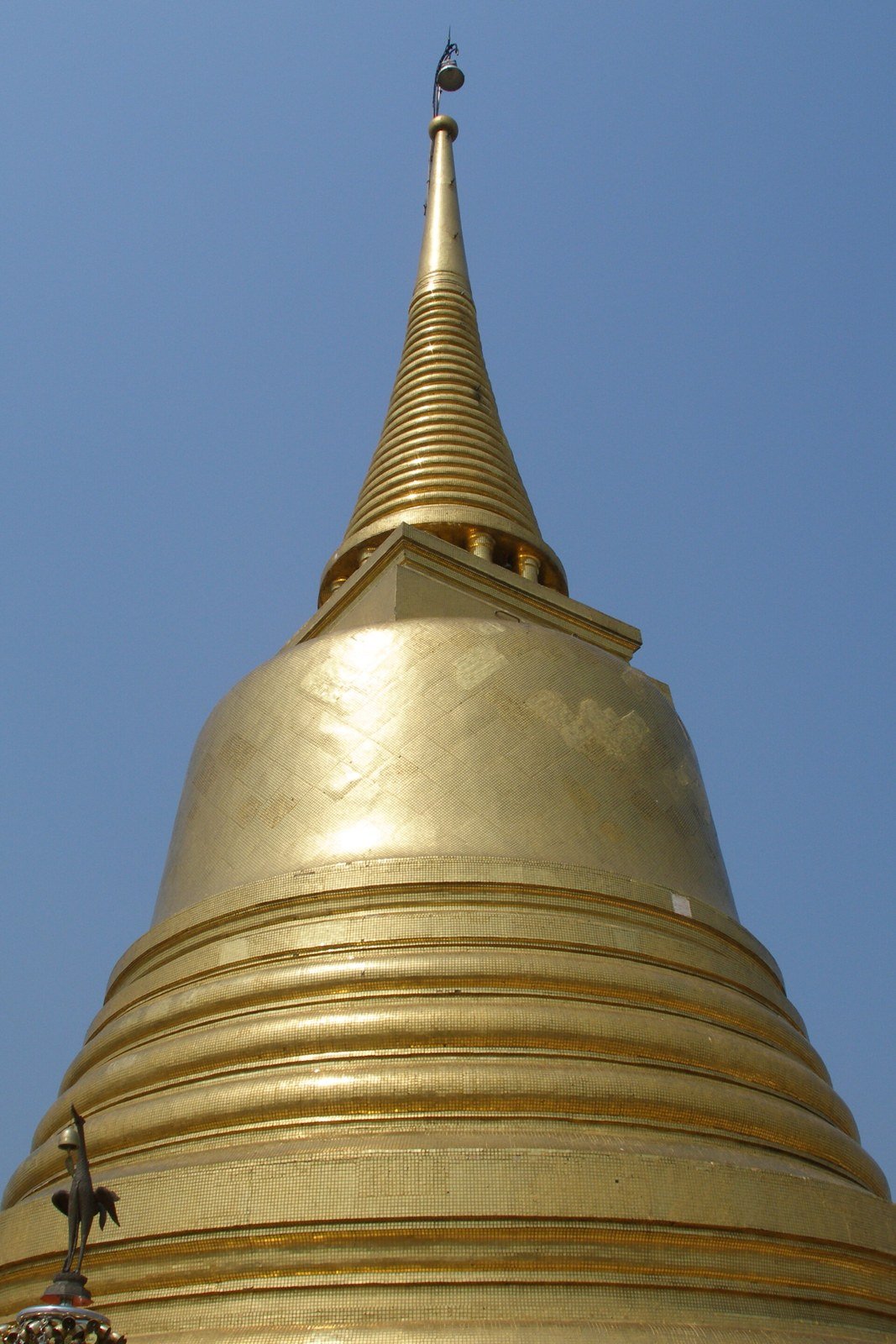
The Golden Mount has an established annual period of worship associated with the relic chedi and the ceremonial red cloth. DASTA and TAT explain the religious importance of the site, which helps make sense of why a visit during a gathering can differ substantially from an ordinary architectural stop.
For an upcoming festival, confirm the actual programme with the temple rather than assuming that an annual description supplies this year's dates. A ceremony may be the main reason for a devotee to attend, while a visitor chiefly interested in the climb may prefer another period. Do not plan a quiet summit photograph around an event schedule that has not been confirmed.
Pair nearby temples without confusing the waterways
Wat Ratchanatdaram and its Loha Prasat make a useful second architectural subject in this part of the old city. The two visits offer different experiences: an exterior hill and relic chedi here, and a metal-spired, multi-level structure there. Check the available entry time for each before deciding which to visit first.
Phan Fa Lilat is associated with the Saen Saep canal boat corridor. This is not the same service as a Chao Phraya river boat or the cross-river ferry used for Wat Arun. When arranging a boat arrival, identify the canal and the actual landing, then plan the remaining approach to the temple separately. No through-ticket between these different waterways is implied.
An old-city hotel can support a morning devoted to Wat Saket and nearby temples, while a hotel elsewhere in Bangkok may be more useful for its rail connection. Compare the actual route from the property, rather than selecting a room because its description says 'central Bangkok'. The climb itself remains the substantial activity once you arrive.
Sources & further reading
Sources checked on 29 October 2026. Confirm current visiting arrangements and ceremony notices before setting out.