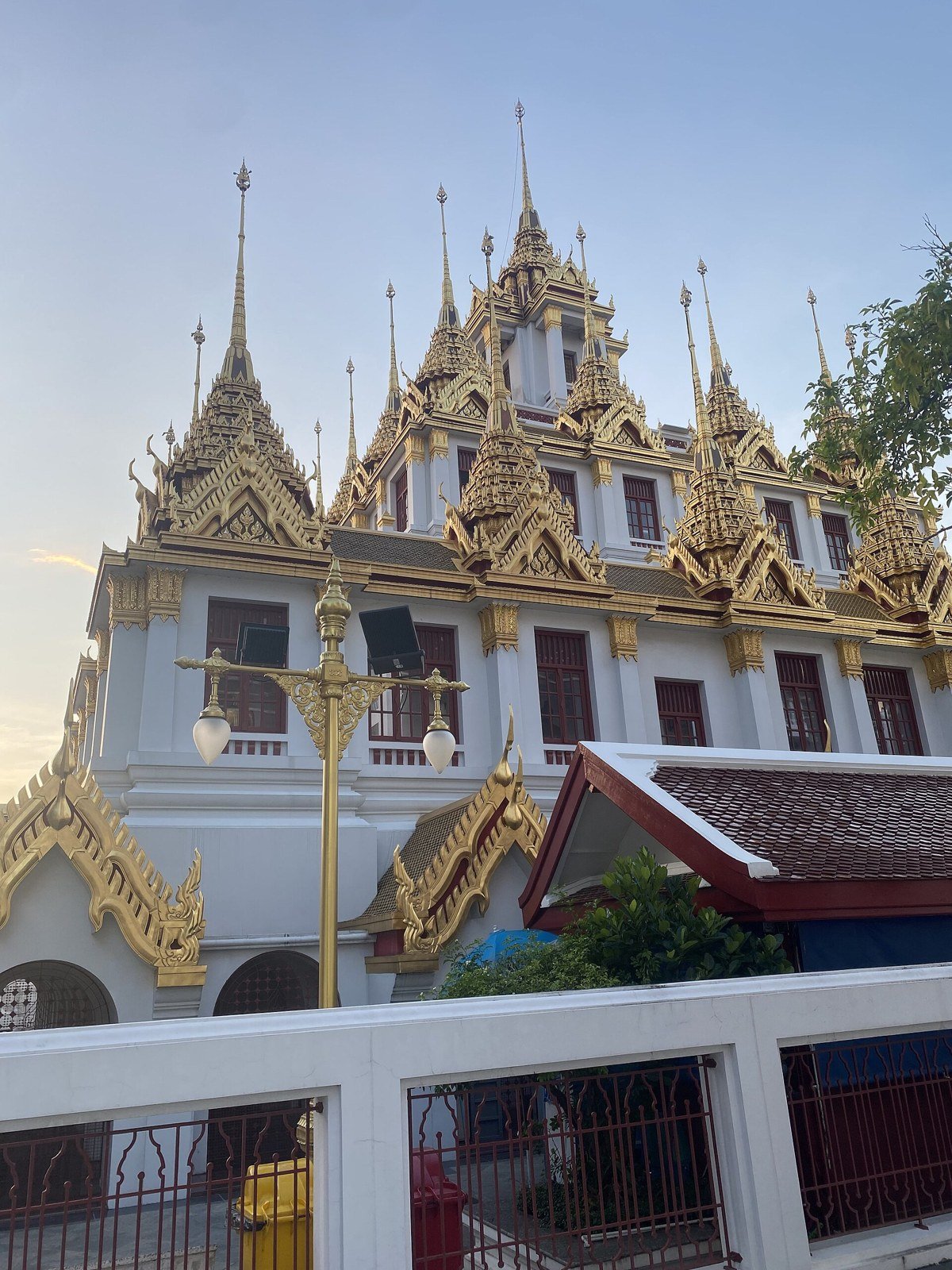
Loha Prasat is the reason to give Wat Ratchanatdaram its own stop. The layered, metal-spired building is different from the single bell-shaped chedi familiar at many Thai temples. The visit works best when you look at its structure from outside and then, where access is permitted, follow the interior levels rather than treating the roofline as the whole attraction.
Understand the building before going inside
Wat Ratchanatdaram stands on Maha Chai Road by the Ratchadamnoen area. King Rama III commissioned the temple in 1846 in honour of Princess Somanass Waddhanawathy. Loha Prasat was conceived as its distinctive major structure instead of an ordinary chedi. It therefore belongs to the temple's religious plan, rather than being a separate modern viewing tower.
TAT describes 37 spires representing the 37 qualities associated with the path to enlightenment. That gives the repeated roof forms a meaning beyond ornament. Look at how the spires step inward and upward before entering; understanding the overall arrangement helps the interior climb make more sense.
The building is generally translated as the Metal Castle, but the name should not lead you to expect a military fortress. It is a Buddhist monument within a working monastery. The lower and upper parts of the visit should be approached with the same respect as the adjoining religious buildings.
Use the lower levels for more than reaching the stairs
A Bangkok Metropolitan Administration visitor publication describes exhibition material on the lower level and information about architecture, walking meditation, seated meditation and Buddhist practice on the levels above. These displays make an interior visit more useful than simply ascending to take a photograph and immediately returning down.
If interpretive material is available in a language you read, choose a subject and spend time with it. The repeated corridors and roof arrangement can otherwise make the building feel like a series of similar spaces. You do not need to invent a symbolic explanation for every doorway; use the information actually supplied inside.
Temple use and visitor access can overlap. If a space is occupied by people meditating or praying, avoid standing in its entrance to narrate a group visit. A different open level or the exterior can be a more suitable place to discuss the architecture. Follow any direction on where shoes should be removed rather than assuming the same rule applies to every passage.
Decide how far to climb
Loha Prasat's vertical route uses an internal spiral stair. TAT and the BMA description associate the highest part of the structure with Buddha relics, while an upper viewing level provides an outlook over the surroundings. Those are different reasons to go up; the relic area should not be approached as an extension of a casual photo terrace.
The upper visit should not be assumed to be step-free. If stairs are a concern, ask at the entrance which parts of the interior can be visited without making the full ascent. An exterior view and a lower-level visit can still help explain the structure, rather than making the summit the only definition of a successful stop.
Ask staff about the current circulation route before climbing, especially when a service, maintenance work or a group visit changes movement inside. A published count of levels does not establish that every level will be accessible on the day. Keep a clear path for people descending as well as those moving upwards.
Plan a daytime architectural visit
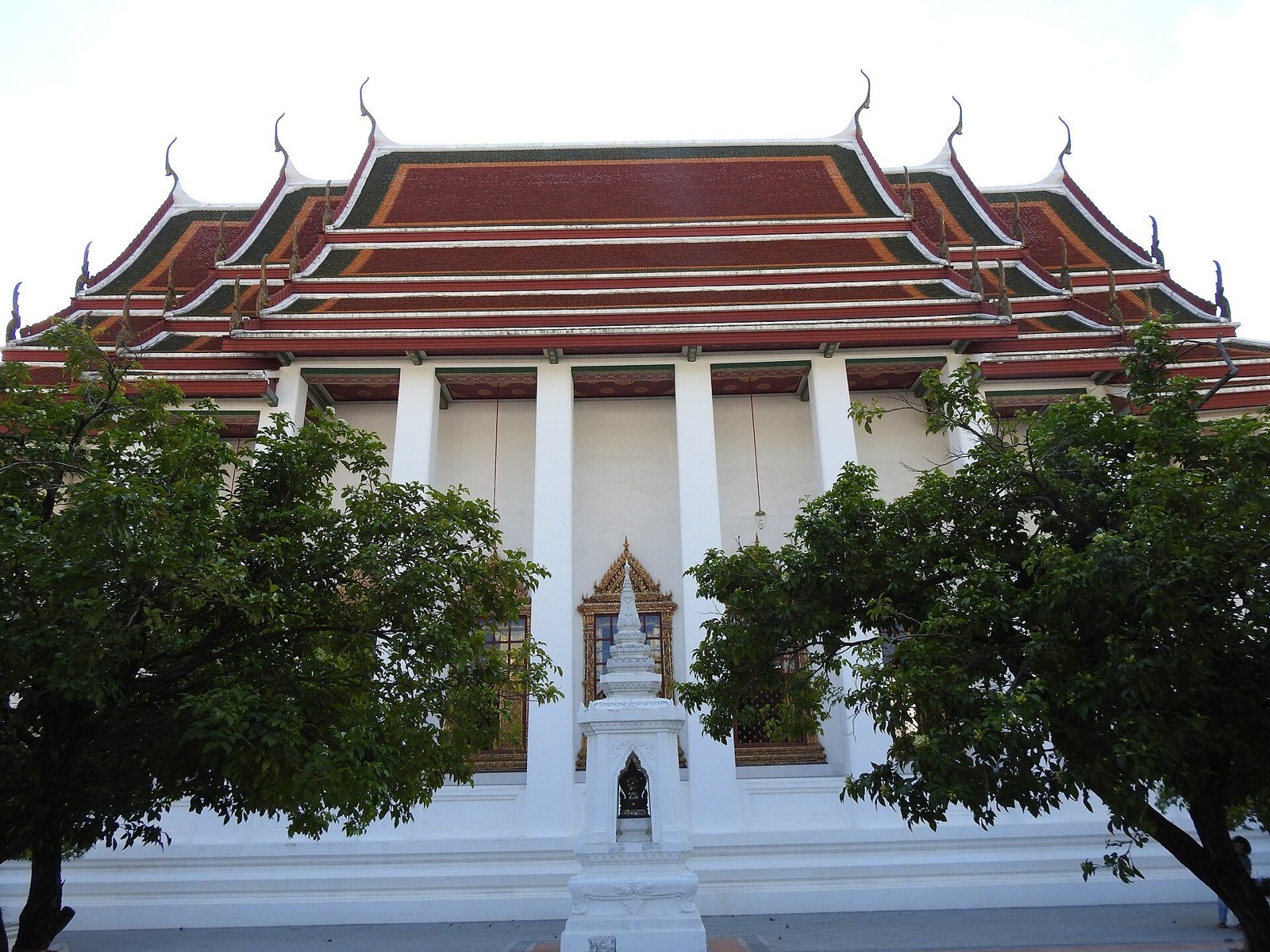
TAT's destination listing gives daily hours of 08:00–17:00 and a 20-baht foreign-visitor charge. Confirm the current arrangement at the entrance, including whether the charge applies to the interior of Loha Prasat or the particular visitor area you intend to enter. A view of the exterior and access to all interior levels are not the same visit.
Allow the available time to shape the sequence. If you arrive with only a short period remaining before visitor entry ends, an exterior look may be more realistic than beginning a climb under the assumption that the building will stay open until you have finished. Current staff instructions take precedence over an older printed or online description.
Combine contrasting temples around Phan Fa
Wat Saket offers the clearest architectural contrast nearby: a climb around a hill leading to a golden chedi rather than a climb inside a metal-spired building. If stairs are a major part of both choices for your party, decide whether two elevated visits in the same half-day are actually desirable. Combining the two is an option, not a requirement.
Wat Suthat gives the route another emphasis, with painted halls and major Buddha images rather than a summit. A practical plan is to choose one principal interior visit and one contrasting monument, then add another stop only if the entry windows and the group's pace support it. This is an editorial suggestion, not a scheduled temple tour.
Phan Fa Lilat belongs to the canal-boat context of this part of Bangkok. It should not be confused with a Chao Phraya river pier or with a ferry across to Wat Arun. For a canal arrival, establish the actual landing and remaining street-level route. For a hotel base, compare the property with this old-city cluster and any rail or road connections you will also need.
Sources & further reading
Sources checked on 29 October 2026. Confirm current visiting arrangements and ceremony notices before setting out.