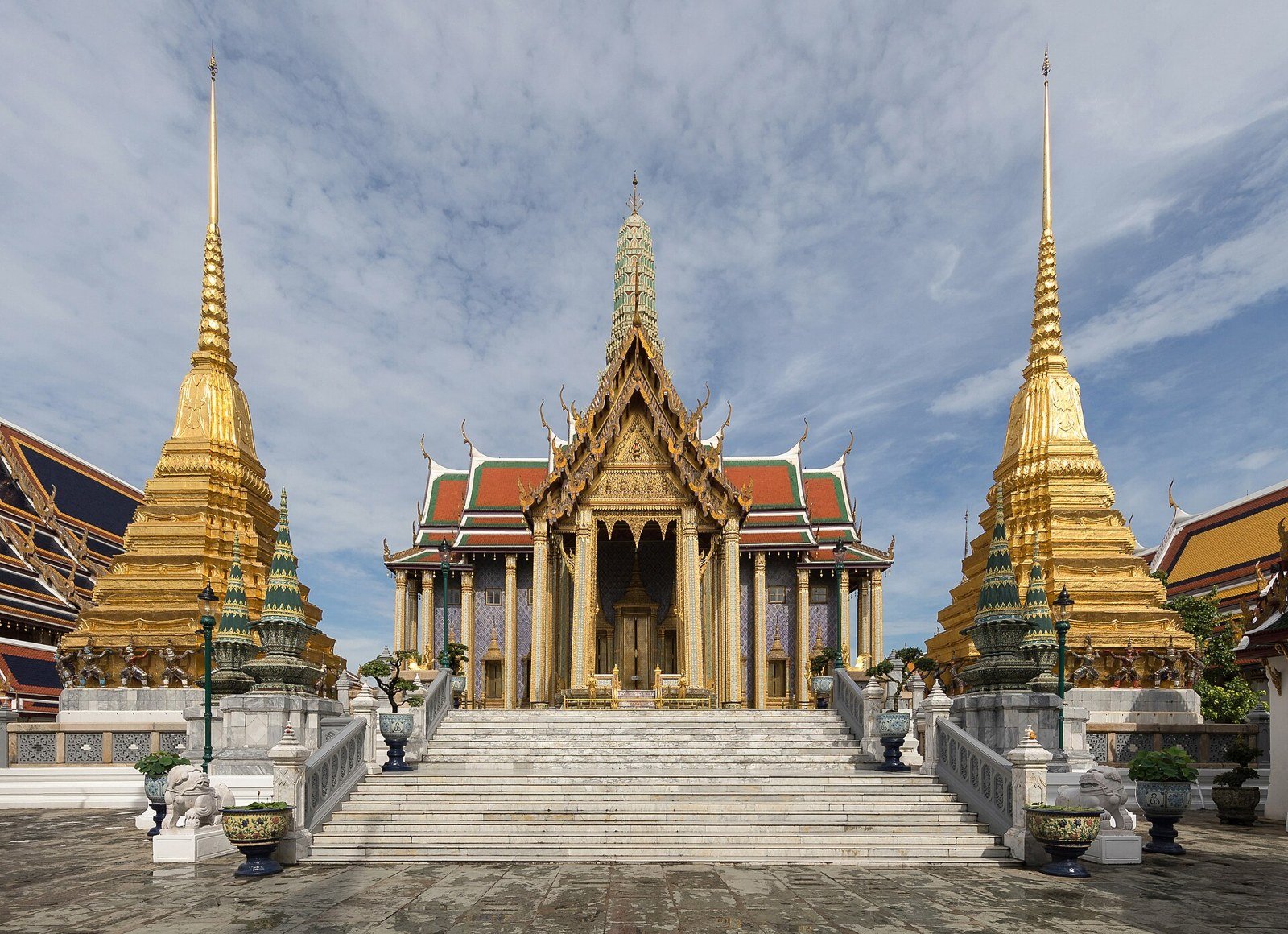
Wat Phra Kaew is a temple visit inside the Grand Palace compound, not a separate roadside shrine with its own casual entrance. The Emerald Buddha chapel is the central reason to come, but the surrounding guardians, cloisters and decorated buildings deserve attention too. Plan around the official visitor entrance, the clothing rules and the day’s ceremony calendar before arranging the next temple.
Give the temple its own attention
King Rama I established the royal temple after founding Bangkok as the capital in 1782. Its formal name is Wat Phra Si Rattana Satsadaram; Wat Phra Kaew is the familiar shorter name. The Bureau of the Royal Household describes it as the Chapel Royal, without the resident monks’ quarters found in many other monasteries. That distinction helps explain why its visitor arrangements follow the palace compound rather than the routine of a neighbourhood temple.
This guide concentrates on the temple and its access. The surrounding palace buildings are a related but different visit. A shared admission ticket should not turn the temple into a quick photograph taken on the way to somewhere else. If you want a shorter day, decide which temple features matter most instead of trying to give every building equal time.
Start with the Emerald Buddha, then look outward
The Emerald Buddha is a comparatively small green-stone image placed high on an elaborate gilded altar. The palace’s architectural account identifies three seasonal sets of royal attire, changed according to the lunar calendar. The image is therefore an object of continuing religious and royal observance, not simply a museum display at eye level. Follow the chapel’s access instructions and any restrictions in force during worship.
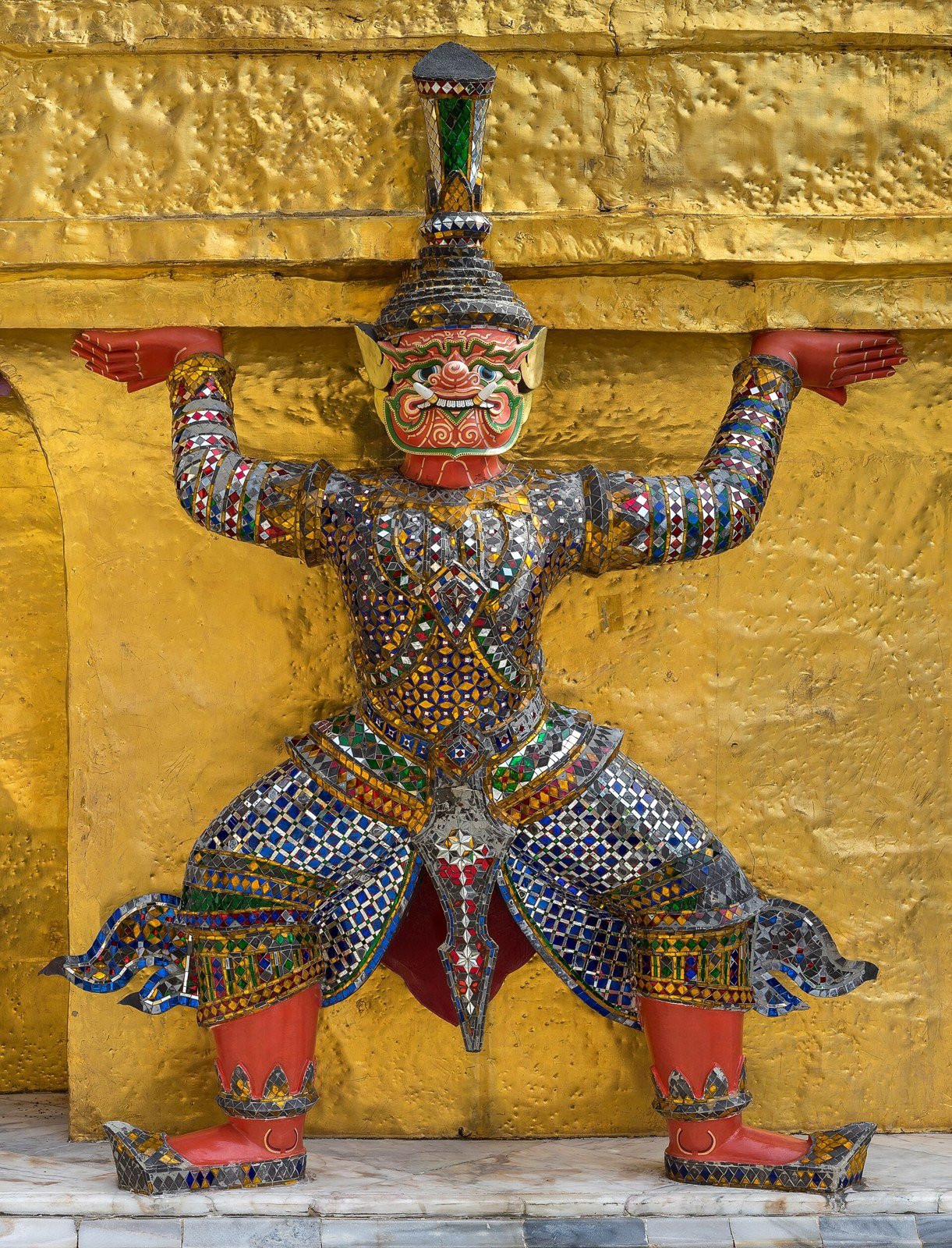
The large guardian figures provide another useful point of orientation. Six pairs stand inside the temple compound facing the chapel. They represent characters from the Ramakian, the Thai adaptation of the Ramayana. The surrounding cloister murals carry that narrative into a different form. Looking at a guardian and then a mural scene gives the visit more focus than collecting photographs of every decorated surface.
An editorial sequence is to orient yourself using the official compound plan, visit the chapel when permitted, then spend time with the guardians and cloister paintings. Adjust that order if a ceremony or managed visitor route changes access. Neither the architectural plan nor a ticket promises that every interior will be available on a particular day.
Read the date-specific calendar before buying
The official schedule checked for 29 October 2026 separately lists the Temple of the Emerald Buddha, the chapel and the Grand Palace as open for the normal visitor day. It also warns that dates and arrangements can change. This is a date-specific status, not a guarantee for the rest of the month or for a future trip.
The palace publishes normal grounds hours of 08:30–16:30, with ticket sales from 08:30 until 15:30. Some other official wording uses 15:30 for the visitor period, so do not treat the later grounds closing time as permission to arrive for a new ticket at that hour. Build the visit well inside the ticket window and use the current schedule for the intended date.
Foreign visitor admission is listed at 500 baht and includes Wat Phra Kaew and the Queen Sirikit Museum of Textiles within the compound. Thai visitors may enter free with Thai identification under the published policy. Those are different admission conditions; an outside tour or transport booking does not itself replace the palace entry arrangements.
Clothing and the actual visitor gate
The palace’s current FAQ directs visitors to Mani Noppharat Gate, following an entrance change introduced in January 2024. Follow the official visitor signage on Na Phra Lan Road rather than assuming every gate in the long perimeter wall is an entrance. Confirm a claimed closure at the official gate or calendar, not through someone offering an alternative excursion outside.
The palace’s dress rules exclude sleeveless, cropped or transparent tops, shorts, torn or tight trousers, cycling trousers and short skirts, among other items. A simple choice is a shoulder-covering top with loose full-length trousers or a long skirt. The Thai-language rules also reject using a shawl over a sleeveless top as a substitute. Dress for the palace’s own requirements rather than the more relaxed appearance of another temple.
The accessibility page currently notes a temporary suspension of the wheelchair-loan service. Anyone relying on equipment should settle that requirement directly before travel. Marked accessible toilets do not establish that every building entrance or every part of the visitor circuit is step-free.
Arrive on the correct side of the river
The palace and Wat Phra Kaew are on the Phra Nakhon side. BEM lists Sanam Chai MRT station, exit 1, for the palace and nearby Wat Pho. That is a useful rail approach, followed by a separate street journey to the visitor entrance; the station is not underneath the temple gate.
For a boat approach, distinguish a service stopping at Tha Chang or Tha Maharaj from a cross-river ferry. The Chao Phraya Tourist Boat lists both piers on its route. Check the chosen operator’s current stopping pattern and leave the river-to-gate leg in the plan. A hotel opposite the palace across the river may still require a crossing before the visit.
Make the next stop a deliberate choice
Wat Pho is a logical second temple on the same bank; Wat Arun requires a river crossing or a different road approach. For a first visit, choosing one of those after Wat Phra Kaew usually leaves more room to understand each temple than treating all three as fixed appointments. This is an editorial pacing suggestion, not an official tour duration.
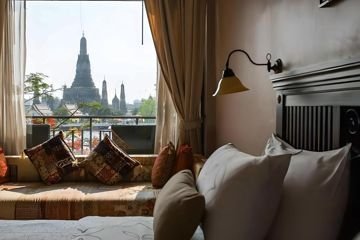
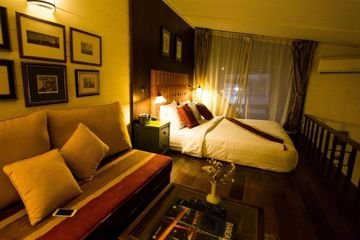
For accommodation, compare the actual Phra Nakhon, Tha Tien and riverbank setting rather than a general Bangkok address. A rail-connected hotel can also work if you are comfortable making the station-to-gate journey. Use the individual hotel review to check its entrance, room setting and transport connection; do not equate a river view with direct access to the royal temple.
Sources & further reading
Sources checked on 29 October 2026. Confirm current visiting arrangements and ceremony notices before setting out.
- Bureau of the Royal Household — temple history
- The Grand Palace — Emerald Buddha
- The Grand Palace — guardians and Ramakian
- The Grand Palace — date-specific visitor schedule
- The Grand Palace — admission and dress requirements
- The Grand Palace — visitor entrance FAQ
- The Grand Palace — accessibility notice
- BEM — Sanam Chai station
- Chao Phraya Tourist Boat — current pier route