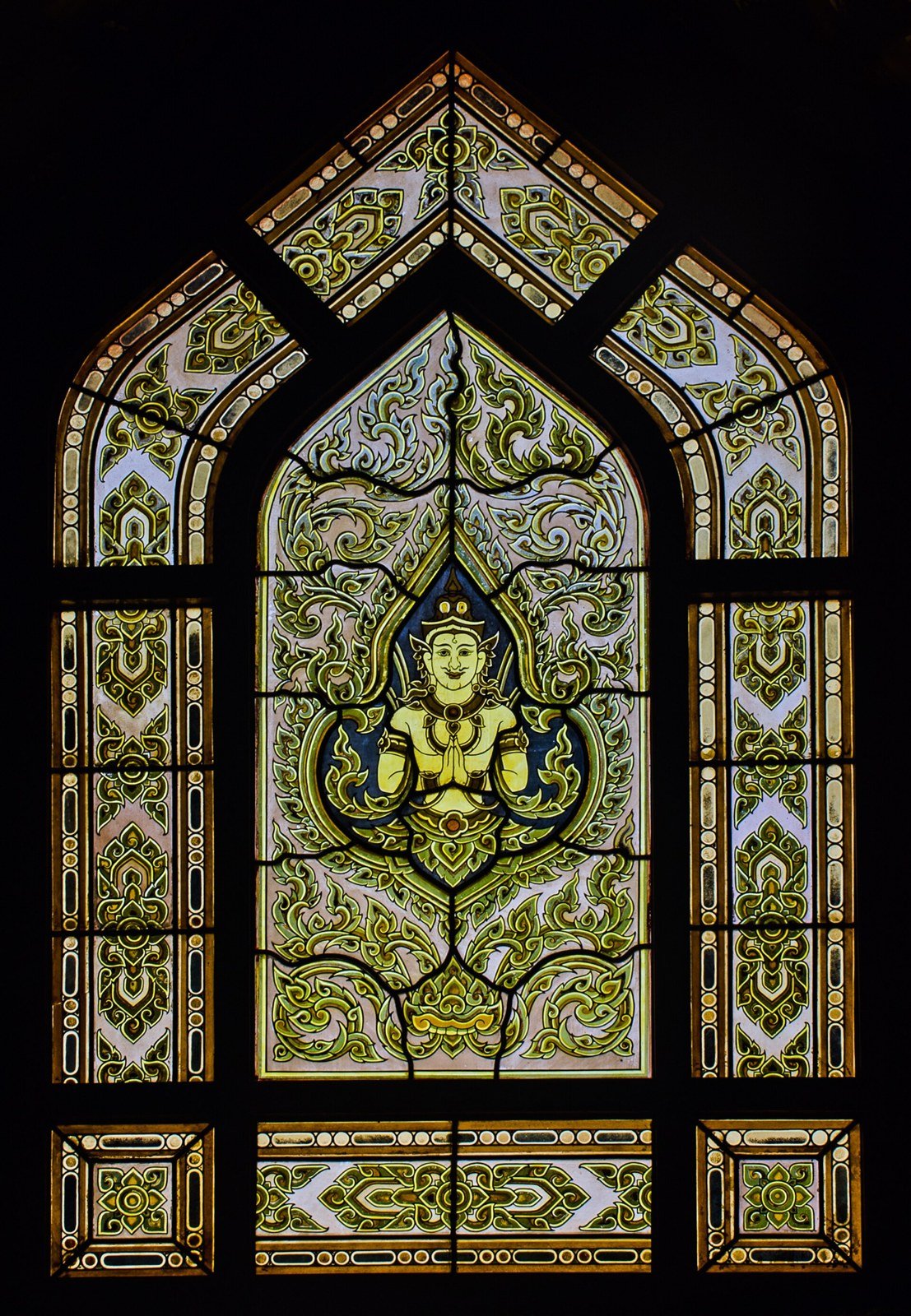
The white-marble hall is the familiar image of Wat Benchamabophit, but the cloister behind it is a reason to slow the visit down. Together they make this a particularly useful stop for travellers interested in the relationship between architecture and Buddhist sculpture. Its Dusit location also calls for a separate transport decision from a riverfront temple circuit.
Start with the hall as a complete composition
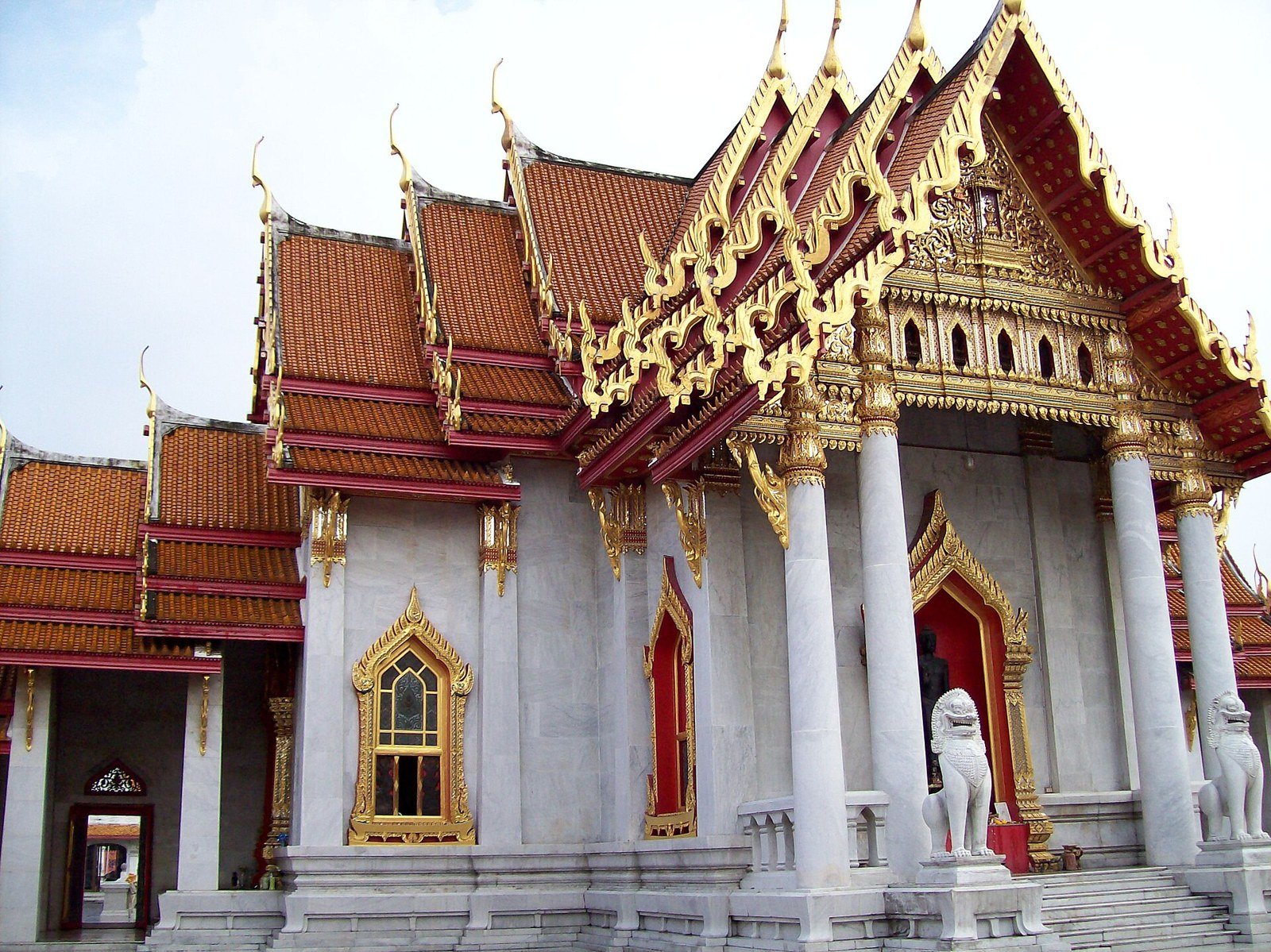
Wat Benchamabophit stands on Si Ayutthaya Road in Dusit. The temple is associated with King Chulalongkorn and with the design work of Prince Naris. The marble used on its most recognisable buildings came from Italy, while the roof forms and decorative language belong to Thai temple architecture. The contrast is the subject, rather than a reason to call the building European.
TAT describes a four-sided, five-tiered roof arrangement and a carefully ordered plan. Begin by looking at the whole approach to the ordination hall before moving close to individual doors or decorative panels. The value of the front view is that the columns, roof and entrance can be understood together; it is not necessary to wait for the entire forecourt to become empty.
The temple's marble lions and columns provide a smaller-scale architectural subject after the wider view. Leave their circulation space clear. A staged photograph should not prevent someone from entering the hall for worship, and the marble surfaces should not be treated as props to stand or climb on.
Separate the principal image from the cloister collection
Inside the ordination hall is a version of Phra Buddha Chinnarat, based on the revered image in Phitsanulok. The Buddha images in the surrounding cloister form a different part of the visit. Tourism Directory identifies 52 images in varied traditional attitudes, while TAT explains that the collection was assembled from different regions and abroad.
A worthwhile way to look at the cloister is to compare a small number of images rather than trying to photograph the entire collection in sequence. Notice posture, proportions and the treatment of the robe, then consult a label when one is present. An unfamiliar style does not need to be assigned a place or date by guesswork.
If the hall is being used for a religious service, the permitted route through the cloister may still give a meaningful architectural visit. That is a possibility to ask staff about, not a promise that the same access arrangements will apply during every ceremony. Plan around the areas open that day.
Recognise the working monastery beyond the postcard view
Dusit district's description explains the separation between religious buildings, monastic residential space and other temple land. This matters when exploring: an orderly-looking path is not necessarily an invitation to walk into the monks' living area. Keep to the signed or clearly public visitor route rather than trying to turn the entire compound into a sightseeing circuit.
Other buildings are identified in official destination descriptions, including a belfry and pavilions. They provide context for the broader monastery, but a name on a destination list is not evidence of a publicly accessible interior. If a particular structure interests you, ask about it directly and allow the temple to determine the visitor boundary.
Wear clothing appropriate for an active place of worship, with shoulders and knees covered, and follow shoe-removal signs at the relevant threshold. Do not assume that a photography session elsewhere on the grounds changes the rules inside the hall. This is especially important here, where the architectural foreground can make the entrance seem like an open photographic set.
Treat the ticket and the hall’s opening separately
Allow for a daytime visit instead of relying on an evening arrival after other temples. Published government visitor information and TAT's Japanese office do not give identical admission figures or a single uniform opening pattern. Check the current entrance board for the charge and the hall's access on the day you go.
A visit centred on the marble hall and cloister is different from attending a religious programme or requesting access to another building. Ask what the visitor admission covers.
Make Dusit a deliberate part of the route
Wat Benchamabophit does not sit in the same compact temple cluster as Wat Suthat, Wat Saket and Loha Prasat. A separate road connection can be the more straightforward choice than extending an old-city walking circuit simply because all the stops are labelled Bangkok temples. Confirm the destination as the Marble Temple in Dusit when arranging that connection.
TAT's Japanese visitor information suggests a taxi connection from Phaya Thai as one approach. Use the station name to organise a journey, without treating a published driving estimate as a traffic guarantee. If you plan another activity after the temple, decide on the onward destination before choosing where a car should collect you.
For accommodation, compare the actual location in relation to Dusit and your other plans. A property convenient for a riverside ferry circuit may still need a road journey here, while a rail-linked city hotel can be useful for more than temple sightseeing. The best base for this visit depends on the rest of the day rather than the word 'Bangkok' in a hotel address.
Sources & further reading
Sources checked on 29 October 2026. Confirm current visiting arrangements and ceremony notices before setting out.