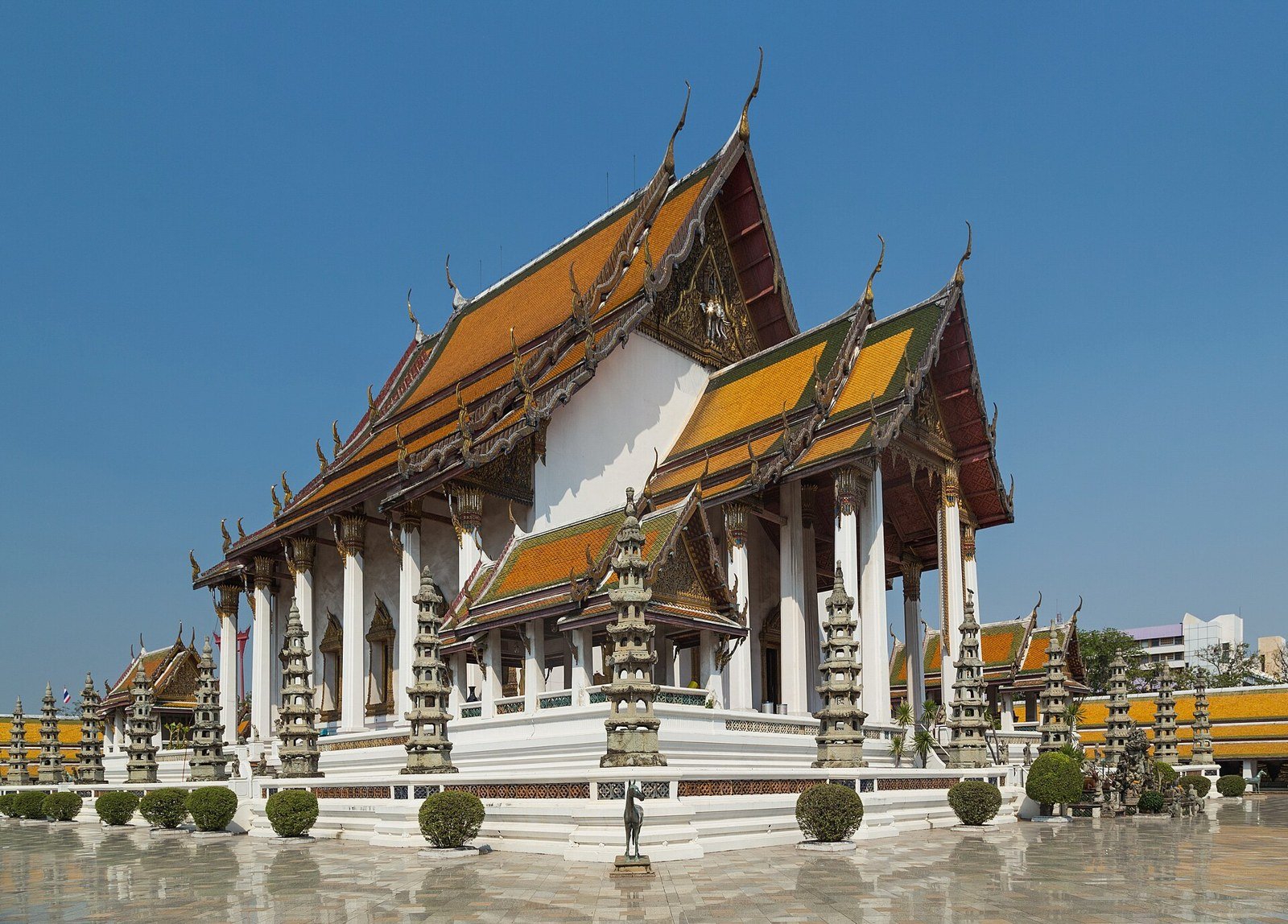
The Giant Swing makes Wat Suthat easy to identify, but it is outside the temple and is only the start of the visit. The more rewarding plan is to leave time for the halls and their paintings, rather than making a photograph of the red structure the whole stop. Come for the interior art as well as the old-city setting.
The exterior landmark and the temple are different stops
Wat Suthat is on Bamrung Mueang Road in Phra Nakhon. The Giant Swing stands in front of it and is associated with former Brahmanic ceremonies, rather than an activity that visitors can ride or watch as a regular demonstration. Seeing the swing from the street does not mean that you have visited the temple's interior.
A useful first decision is whether you want an architectural exterior stop or time in the religious halls. The first can fit a passing old-city walk. The second deserves its own place in the itinerary, because the interior paintings and Buddha images reward looking at details rather than simply crossing the compound.
Know which Buddha image belongs to which hall
The temple's own account distinguishes Phra Sri Sakyamuni from Phra Phuttha Trilok Cheth. Phra Sri Sakyamuni, also called Phra To, was brought from Sukhothai and is associated with the main vihara. Phra Phuttha Trilok Cheth is the principal image of the ordination hall. Treating every building as the same 'main hall' makes the visit unnecessarily confusing.
Use the entrance signs or ask temple staff which hall is available to visitors. A photo of one principal image does not prove that another hall will be open on the same day. This distinction is especially useful if your main interest is a particular image or painting: name it when asking rather than showing only a picture of the Giant Swing.
The royal association with King Ananda Mahidol is another reason this is more than an architectural monument. The temple describes his ashes being placed before Phra Sri Sakyamuni and an annual commemoration on 9 June. That history does not establish the programme for a future visit, but it explains why worship and ceremonial use remain central.
Give the painted details their own attention
TAT highlights the nineteenth-century murals, while the temple's architectural account places the halls, cloisters and surrounding elements within a much larger sacred composition. Look at a group of paintings in relation to its hall rather than trying to identify every scene while moving continuously between buildings.
The temple also explains the famous hungry-ghost painting as part of its religious and storytelling tradition. It should be approached as a depicted Buddhist theme and local tradition, not evidence that an actual supernatural event is part of a visitor experience. A guide with knowledge of the paintings can add more than an itinerary that merely names the monument.
Where photography is allowed, avoid flash or any method that conflicts with the posted rules. Do not touch a painted surface or lean equipment against it to frame a picture. If a service is taking place, give the worshippers priority; another open part of the compound can be a better next stop than waiting beside people who are praying.
Plan for an interior visit in daylight
Published visitor information is not consistent about the end of the visiting day. TAT and the government AM 2026 visitor guide give different opening windows, so an evening view of the grounds should not be taken as a guarantee of access to the halls. Plan the interior visit in daylight and confirm the entrance arrangements when you arrive.
For an entry charge, use the current posted foreign-visitor rate and check what it covers. If a museum or special exhibition is offered separately, ask about that component rather than assuming a temple admission includes every room.
Use Sam Yot as a real route choice
BEM's official Sam Yot station information lists Wat Suthat and Sao Chingcha among the destinations reached from the station area. That gives you a practical rail-based approach, with the remaining journey made at street level. The station is not a gate inside the temple, and a hotel beside another Blue Line station can still involve a separate onward walk.
For a half-day focused on this part of Bangkok, one option is to make Wat Suthat the interior-art visit and add Wat Ratchanatdaram for the contrast with Loha Prasat. Wat Saket adds a hill climb rather than another level hall. Choose that third stop according to your interest and energy instead of treating all three as interchangeable temple ticks.
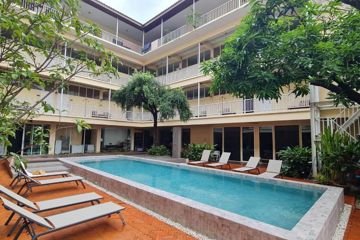
A hotel near Sam Yot or the old-city streets can suit this plan, while a riverside hotel may favour a different arrival route. Compare where the property actually stands and how you will return after the last visit. There is no need to cross the Chao Phraya for Wat Suthat itself.
Sources & further reading
Sources checked on 29 October 2026. Confirm current visiting arrangements and ceremony notices before setting out.